


A Morning in Oviedo: A Reflection on Smoking Culture in Spain

Updated: Mar 3
The Scene in Oviedo
One morning in Oviedo, I encountered a boy, perhaps sixteen or seventeen, casually smoking a cigarette. For him, it was just another day. For me, it sparked a mix of resentment and dismay. How could someone so young already be addicted to cigarettes?
To be blunt, Spain has a massive, epidemic-sized smoking problem. Smoking is everywhere. Coming from the US, I noticed this within just a few hours.
I saw a young mother puffing away at an outdoor café while her baby slept beside her in a stroller. Was I the only one horrified by the sight of cigarette smoke wafting over the child? Certainly, her two friends at the table weren’t raising any objections on the infant's behalf. In other scenes, smoking parents casually strolled with their children.

These aren’t outlier examples; they’re the daily texture of life in Spain in 2025. The general attitude I sense toward smoking in Spain is one giant, appalling shrug from both smokers and non-smokers alike. I cannot wrap my head around having to inhale cigarette smoke in a public space, such as Oviedo's spectacular park, Campo de San Francisco.

The Economic Cost of Smoking in Spain
Meanwhile, the Spanish government is missing a great opportunity to curtail smoking among its young citizens before it ever starts. They could target people like the 16-year-old I described above with a robust multi-year campaign. Spain is losing time, money, and opportunity. In 2024, Spain spent $8.8 billion on all tobacco-related illnesses.
Using statistics from E&S, CDC, and others, we could conservatively say that if Spain could cut daily smoking by roughly 700,000 people over five years, it could plausibly save around €0.8B in public healthcare costs within five years—and roughly €3.5B within ten. But those are countable, tangible figures that don't account for the daily repercussions of smoking: disability, missed hours of work, clinic and ER visits for asthma and recurrent COPD attacks, and hospitalizations.
Why Cigarettes Hook Fast — And Where Spain Falls Short
What makes cigarettes addictive (in one minute):
Nicotine hits the brain in ~10 seconds, triggering dopamine, the reinforcement messenger that trains the brain to crave another hit.
Engineered delivery: smoke chemistry (free-base nicotine, burn rate, sugars → acetaldehyde) boosts dependence.
Conditioned cues: branding, rituals, and environments (terraces, bus stops) keep cravings alive.
Where Spain falls short (compared with France/UK/NL):
The cigarette prices are too low, making uptake and relapse easier.
No plain packaging, so branding attracts teens, makes it look "cool," and sustains cues. In contrast, the Netherlands, France, and the UK pair higher prices with plain packaging (logo-free, standardized packs) that reduces tobacco’s visual allure.


Retail access is too easy: at many outlets, supermarket presence is not curbed like in the NL.
Outdoor exposure persists: terraces, bus stops, and public parks (see above), where nonsmokers must tolerate secondhand cigarette smoke.

The no-smoking-in-restaurants rule is somewhat of a joke because many smoking customers are within easy puffs' reach.
Spain’s policy says one thing. Daily life says another.
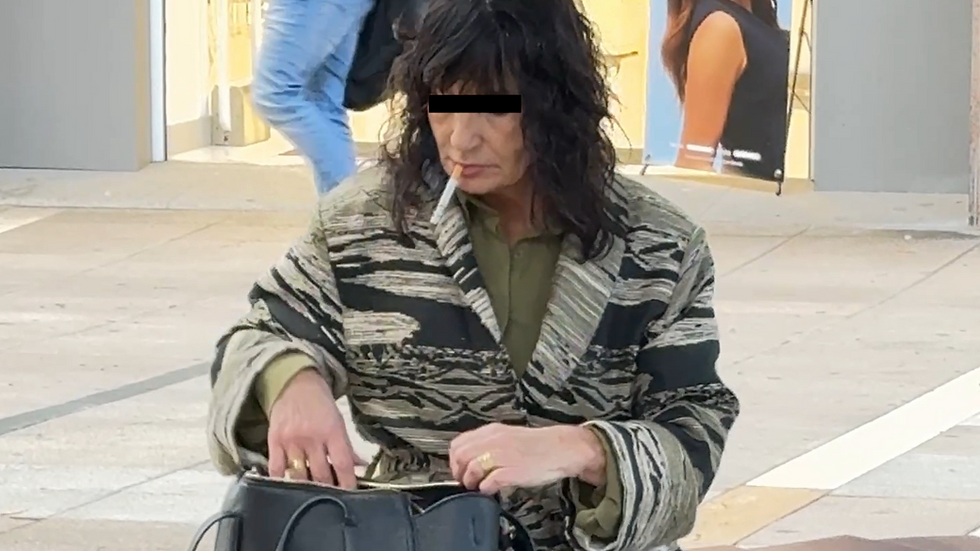
Spain has a national tobacco plan (2024–2027) and a draft law to extend smoke-free spaces outdoors (terraces, beaches, bus stops, playgrounds, stadiums) and to tighten rules on vapes. On paper, fine. In practice, non-smokers still inhale smoke at doorways and on terraces, and kids still see cigarettes as normal. Until rules are passed, implemented, and enforced, “policy” is just paperwork.
Why Spain Trails France, the UK, and the Netherlands
Campaigns people actually notice: France’s Mois sans tabac (month without tobacco), England’s Stoptober, and the Dutch Rookvrije Generatie keep quitting visible year-round. Spain’s messaging is patchy and easy to miss.
Outdoor protections you feel: France applies national outdoor restrictions with fines. Spain’s stricter outdoor rules are pending; if they are in effect in other cities, I have not seen any evidence of them where I am in Oviedo.
End-game urgency: The UK is pushing a “smoke-free generation” (age of sale rises every year). Spain has goals, but no comparable end-game law.
Low pricing: Spain still allows branded packs and keeps prices comparatively low—exactly what sustains youth uptake.
What Should Be Done to Curtail Smoking in Spain
Pass + enforce smoke-free rules outdoors—terraces, beaches, bus stops, stadiums, playgrounds—especially playgrounds.
Adopt plain packaging and end branding at the point of sale.
Raise prices and restrict retail access (fewer outlets; supermarket bans).
Fund a national, annual quit drive with pharmacy coaching, apps, and hard-to-miss media.
Resource enforcement to enable municipalities and health inspectors to act.
Smoking in Spain: Skin Ravage vs. High-End Skin Care

In Spain, the "farmacia" green cross is everywhere. It doesn’t just mark prescription access—it signals a dense retail ecosystem built around dermocosmetics. Spain has roughly one community pharmacy for every 2,200 people, which is about twice the per-capita density of the U.S. and several times that of Sweden. These farmacias aren’t American-style drugstores with a pharmacy counter tucked in the back; they’re regulated health shops whose prominent and eye-catching displays often feature retinoids, serums, and SPF creams. Added to that are the striking numbers of dermatology and aesthetic clinics—lasers, peels, injectables—now woven into the urban fabric.
The irony is hard to miss: a culture where cigarette smoke remains routine, paired with an unusually dense marketplace devoted to counteracting what smoke and sun reliably destroy. It is a curiously inverted logic, a reversal of common sense: wreck my skin now, try to repair it later when it's probably too late.
The Path Forward
As I reflect on my experiences in Oviedo, it becomes clear that change is essential. The health of future generations hangs in the balance. By implementing effective policies and raising awareness, Spain can shift its smoking culture for the better.
By the numbers
Spain: ~*1 pharmacy per 2,200 people
U.S.: ~*1 pharmacy per 4,700 people
Sweden: ~*1 pharmacy per 7,500+ people
Sources: Consejo General de Colegios Farmacéuticos; INE (España); The Lancet Oncology.
All images by Kwei Quartey unless otherwise stated
⭐ Don’t forget to follow me on Instagram for more content: @kweiquarteyauthor


I appreciated how the clear direction stayed helpful, which made the message easier to take in. It made the read enjoyable and made sense. kp88
This piece did a good job of keeping the tone friendly, and the result felt neat and approachable. It gave a fresh feel and stayed useful.
8xbet
This was a clear and easy to follow read, and the useful detail made it easy to stay interested. It stayed nicely focused in a simple way. qs88
I enjoyed the wording in this write up since it made the whole read feel lighter. It felt balanced overall and stayed useful. 88ibet
I genuinely liked this article, especially the natural wording, because it helped the post stay focused. It had a friendly rhythm and stayed readable. FV88